Compliance Automation Best Practices for 2026
Learn the latest best practices for automating compliance workflows, reducing manual effort, and staying ahead of regulatory changes.
The State of Compliance in 2026
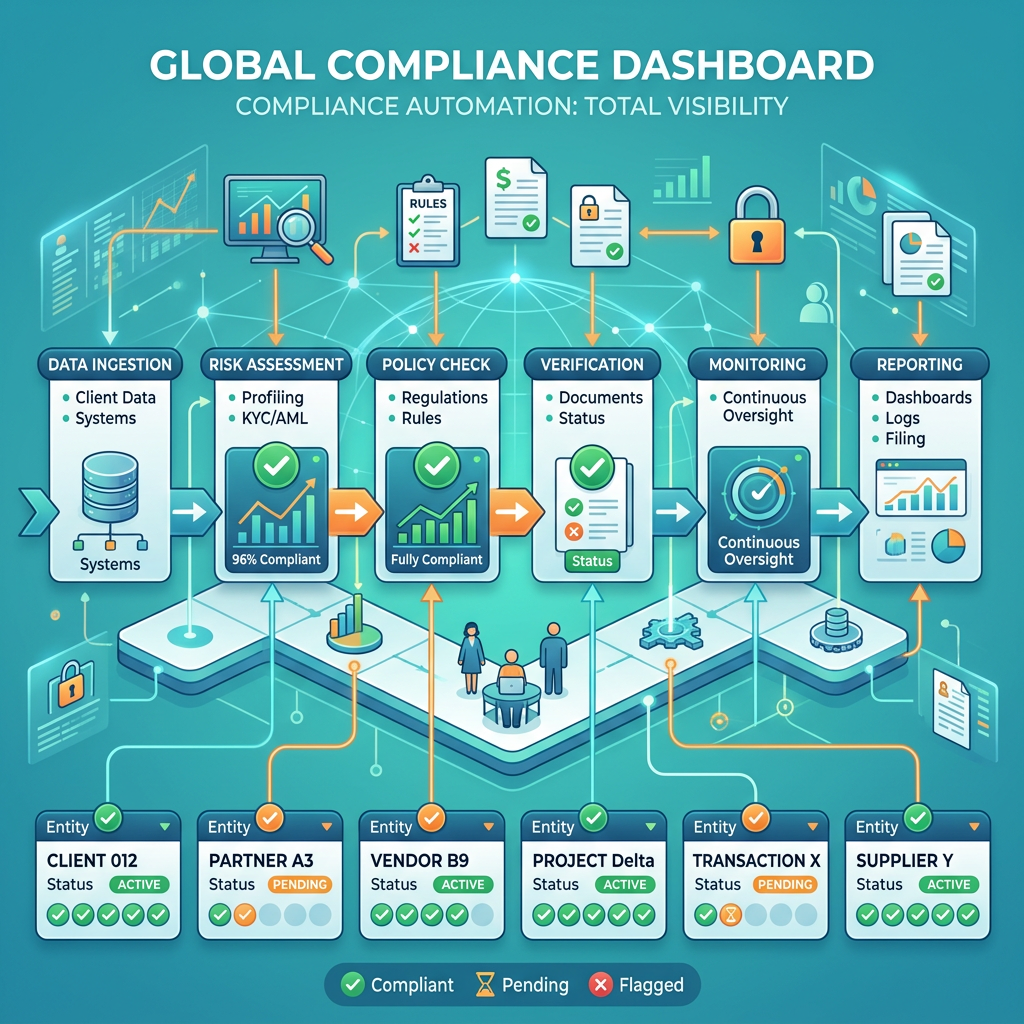
Compliance automation has evolved significantly. With regulatory requirements growing more complex each year, organizations are increasingly turning to technology to manage their compliance obligations efficiently.
Why Automate Compliance?
Manual compliance management is error-prone, time-consuming, and difficult to scale. Automation offers several key benefits:
Reduced Human Error: Automated workflows follow consistent rules every time
Time Savings: Eliminate repetitive manual tasks like data entry and deadline tracking
Better Visibility: Real-time dashboards show compliance status across all entities
Audit Readiness: Complete audit trails are generated automatically
Scalability: Add new entities without proportionally increasing compliance staff
Best Practices
1. Start with a Compliance Inventory
Before automating, you need a complete picture of your compliance obligations. Document every requirement, deadline, and responsible party across all entities. This inventory becomes the foundation for your automation rules.
2. Prioritize High-Impact Workflows
Not all compliance tasks benefit equally from automation. Focus first on:
High-frequency recurring tasks (annual reports, quarterly filings)
Multi-step approval workflows
Deadline-sensitive obligations
Tasks requiring coordination across multiple entities
3. Build in Flexibility
Regulations change. Your automation should be configurable, not hard-coded. Use rule engines that allow you to modify workflows without developer intervention. Vulu Vault's compliance rules engine is designed for exactly this purpose.
4. Integrate with Existing Systems
Compliance data doesn't exist in a vacuum. Integrate your compliance platform with:
Document management systems
HR systems (for personnel compliance)
Financial systems (for regulatory reporting)
Communication tools (Slack, Teams, email)
Measuring Success
Key metrics to track after implementing compliance automation:
On-Time Filing Rate: Percentage of deadlines met on time
Time to Resolution: Average time to resolve compliance findings
Manual Hours Saved: Reduction in manual compliance work hours
Audit Findings: Number and severity of external audit findings
Conclusion
Effective compliance automation isn't just about technology—it's about thoughtful process design. Start with a clear inventory, prioritize strategically, and build systems that can adapt as your organization grows.
Ready to automate your compliance workflows? Try Vulu Vault free for 14 days.
See Vulu Vault in Action
Streamline your multi-entity compliance and operations with Vulu Vault.
Start my 14-day free trialCompliance Specialist
Platform Owner
Platform Owner at Vulu Vault, overseeing multi-entity compliance and operations.
Related Articles

Document Vault Best Practices for Compliance Teams
Discover how to organize, secure, and manage your compliance documents effectively with Vulu Vault intelligent document vault.

Mastering Multi-Entity Compliance: A Practical Guide
Learn how to efficiently manage compliance across multiple business entities from a single Vulu Vault dashboard.

Vulu Vault Security Architecture: A Technical Deep Dive
An in-depth look at how Vulu Vault protects your compliance data with enterprise-grade encryption, zero-trust architecture, and continuous monitoring.
Ready to streamline your compliance?
Join thousands of businesses using Vulu Vault to manage compliance across multiple entities.